Who Can Stop a Concrete Pour? Most Crews Cannot Name Anyone
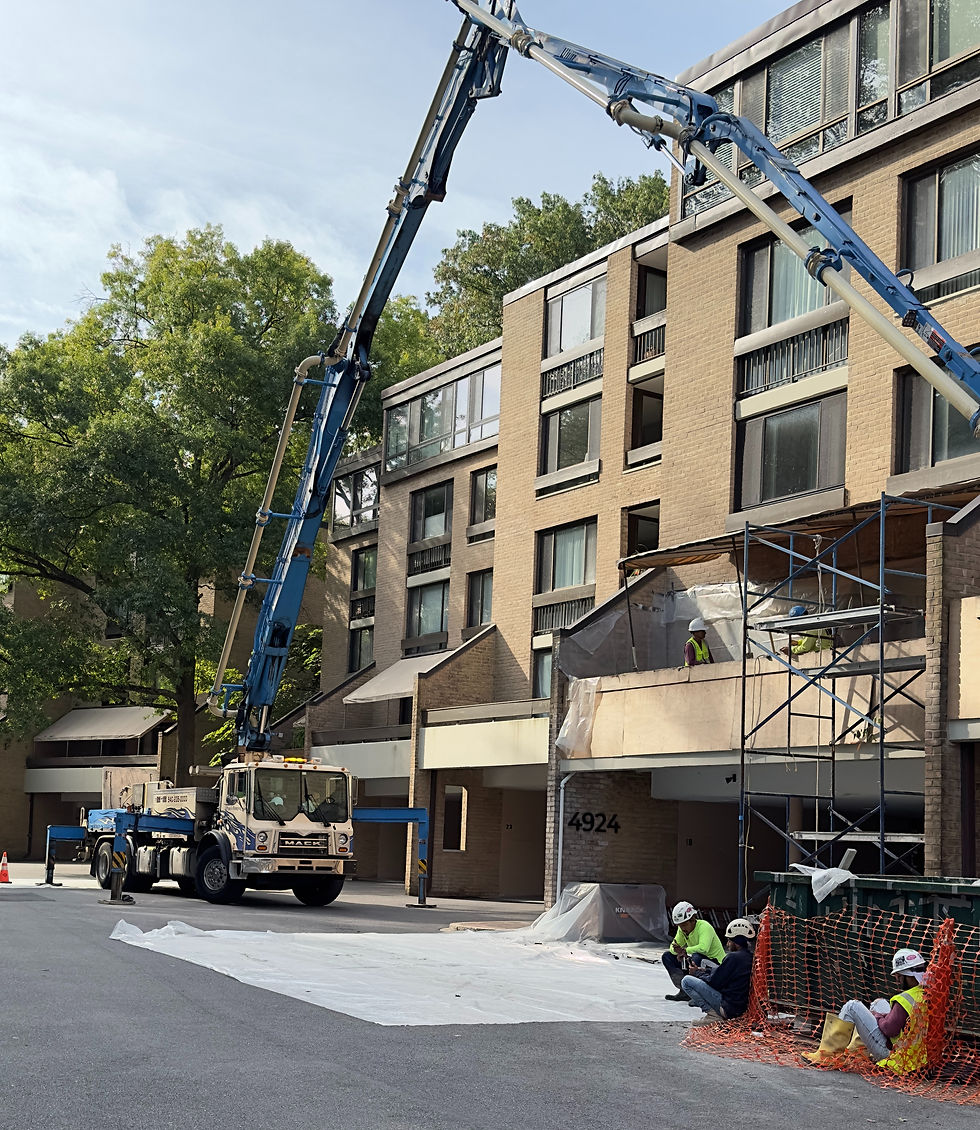
A concrete placement is one of the few construction operations with no natural pause built into it. Once the batch plant loads, a clock starts that nobody on the crew controls. That single fact shapes how people behave around a pour, and it is why stop work authority is harder to exercise during concrete operations than during almost anything else a crew does.
In mid-August 2026, a portion of the Llewellyn Estes Bridge in Old Town, Maine came down while a crew was pouring the new deck. Three workers were injured, none critically, according to local reporting citing Old Town police. On August 20, 2026, the Maine Department of Transportation announced that staff from the Federal Highway Administration's Turner-Fairbank Highway Research Center would provide independent analysis to a forensic review that also includes the beam designer and fabricator, the general contractor, and the University of Maine. MaineDOT has not released preliminary findings on cause, and nothing here speculates about what happened.
What it is a reminder of is that the load path under a pour is a temporary structure, and temporary structures fail differently than permanent ones.
What 29 CFR 1926 Subpart Q Actually Requires
Cast-in-place concrete in construction is governed by 29 CFR 1926.703. The core requirement is short enough to read out loud at a preconstruction meeting.
29 CFR 1926.703(a)(1): "Formwork shall be designed, fabricated, erected, supported, braced and maintained so that it will be capable of supporting without failure all vertical and lateral loads that may reasonably be anticipated to be applied to the formwork. Formwork which is designed, fabricated, erected, supported, braced and maintained in conformance with the appendix to this section will be deemed to meet the requirements of this paragraph."
Two words in the first sentence carry most of the weight. "Maintained" means the design is not a one-time event. Bracing that was correct at erection can be wrong after a subcontractor pulls a member to get a pump line through. "Reasonably be anticipated" means the analysis has to include lateral loads, not just the weight of wet concrete: pump surge, vibration, wind on a deck, and the concentrated loads of people and equipment moving across the deck during placement.
The rest of the section fills in the picture. 1926.703(a)(2) requires that drawings or plans, including all revisions, for the jack layout, formwork including shoring equipment, working decks and scaffolds be available at the jobsite. The phrase "including all revisions" is the one that gets cited, because superseded drawings on site are the violation. 1926.703(b) covers shoring and reshoring. Shoring equipment is inspected prior to erection against the formwork drawings, and equipment damaged below the strength (a)(1) requires may not be used for shoring. Erected shoring is inspected immediately prior to, during, and immediately after placement, and shoring found damaged or weakened after erection must be immediately reinforced rather than simply pulled. 1926.703(e) governs removal of formwork.
There is also 1926.701(a), which prohibits placing construction loads on a concrete structure or portion of one unless the employer determines, based on information received from a person qualified in structural design, that the structure is capable of supporting the loads. Note where the duty sits. The determination is the employer's. An engineer's opinion is an input to it, not a substitute for it. That section gets forgotten during finishing and stripping more often than during placement.
Why Nobody Stops a Pour
The standard is not the hard part. Most contractors doing structural concrete have engineered formwork drawings, a shoring plan and a preplacement inspection form. The hard part is that all of it describes conditions before the pour begins, and the decision that matters happens in the middle of it.
Consider what a laborer sees at 4 a.m. when a shore looks like it has taken a set, or a form is walking, or a bulkhead is weeping. To act on it, that person has to interrupt an operation with trucks staged behind them, the pump primed and finishers on the deck. Everyone understands the cost of stopping. Very few have been told, by name, that stopping is theirs to do.
A written stop work authority policy does not close that gap on its own, a pattern we covered in Stop Work Authority Is Easy to Write Down and Hard to Use. A policy in a binder tells a worker stopping is permitted. It does not tell them stopping is expected, and it does not cover the social cost of being the person who cost the job a load of concrete.
Ask a crew on a placement who is authorized to shut it down and the most common answer is a role rather than a person: the superintendent would call it. That is escalation, not authority. Escalation means finding somebody, explaining the observation and getting agreement, and every minute of that costs more concrete.
A Preplacement Checklist That Addresses the Human Side
Most concrete checklists cover the structure. These cover the decision-making, and they take about five minutes at the preplacement briefing.
Name the people with stop authority out loud, at the briefing, and make sure every person on the deck hears at least two names that are not the superintendent's.
Establish the signal before the pour starts. On a loud deck at night, a hand signal and a radio channel beat shouting, and everyone should know both.
Assign a formwork watch whose only job is monitoring shores, braces, ties and deflection during placement, with no finishing or vibrating duties layered on top.
Confirm the formwork and shoring drawings are physically on site and match what is actually erected, including any field modifications made for pump lines or access.
Walk the shoring immediately before placement and again as the pour progresses, and document who walked it and when.
Agree in advance on what triggers a stop rather than a slow-down, so the call does not have to be argued in the moment.
Decide before the pour what happens to the concrete already in the trucks if you stop, because the absence of that answer is often what makes people hesitate.
The last item gets skipped most and changes behavior most. If a crew knows there is a plan for the load, stopping stops feeling like destroying something.
Common Questions About Formwork and Stop Work Authority
Does OSHA require a specific person to be designated with stop work authority on a concrete pour?
No. There is no OSHA standard requiring a named stop work authority position for concrete placement. What the standards require is that formwork and shoring be designed, inspected and maintained under 1926.703, and that the employer determine load capacity under 1926.701(a). Naming stop authority is a management practice, not a compliance requirement, which is exactly why it gets left out of programs built strictly to the standard.
Who is the competent person on a concrete operation?
Subpart Q uses several distinct terms and none is interchangeable. The employer determines load capacity, based on information from a person qualified in structural design, under 1926.701(a). Tiered single post shores must be designed by a qualified designer and the erected shoring inspected by an engineer qualified in structural design, under 1926.703(b)(8)(i). Field inspection of shoring before, during and immediately after placement is a crew-level duty under 1926.703(b)(3). Copying competent person language from another subpart into a concrete procedure assigns the wrong role.
Key Takeaways
Formwork under 29 CFR 1926.703(a)(1) must be designed, fabricated, erected, supported, braced and maintained for all reasonably anticipated vertical and lateral loads, and "maintained" means field modifications require reevaluation.
Drawings or plans, including all revisions, for the jack layout, formwork including shoring equipment, working decks and scaffolds must be available at the jobsite under 1926.703(a)(2).
Under 1926.703(b), shoring is inspected prior to erection and then immediately prior to, during, and immediately after placement. Shoring damaged or weakened after erection must be immediately reinforced.
A pour has no natural pause, so stop work authority has to be assigned to named people before the trucks arrive rather than escalated through a chain during placement.
Deciding in advance what happens to the concrete already batched if you stop removes the single biggest reason crews hesitate.
Get the Human Side of Your Concrete Program Reviewed
TriCore Safety writes and reviews site-specific safety plans and written programs for construction and heavy industrial work, including the preplacement procedures, roles and authority language that decide whether a crew can actually stop an operation in progress. If your concrete procedure covers the formwork and stops short of the decision-making, that is a fixable gap.
Request a consultation at tricoresafety.com. Related reading: Why We Overreact to the Wrong Things on a Jobsite.

Comments